Petra – The Lost City

Mon, June 17

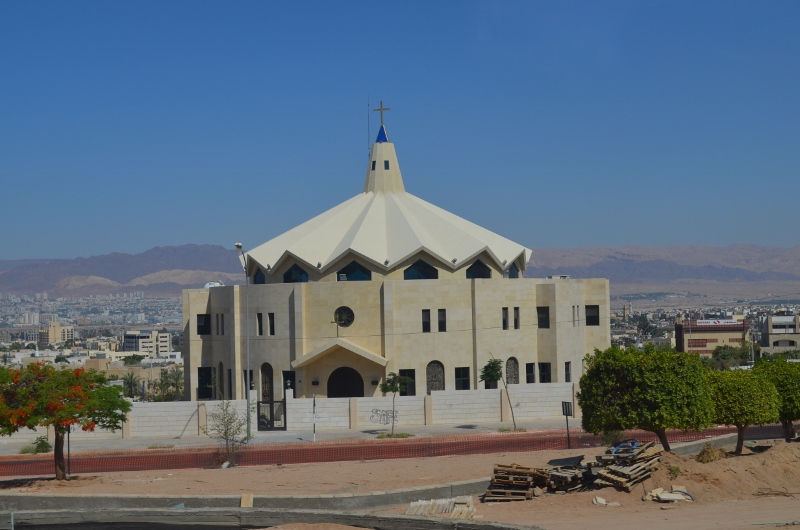
 Early this morning we followed the coast of Egypt on our port side and Saudi Arabia on our starboard side, then the coast of Israel and Jordan as we made our approach to Aqaba on Jordan’s southern coast.

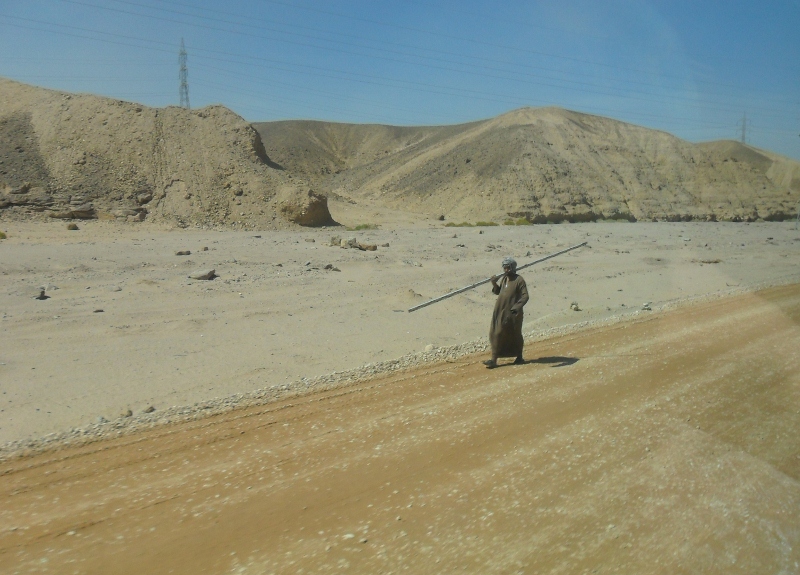
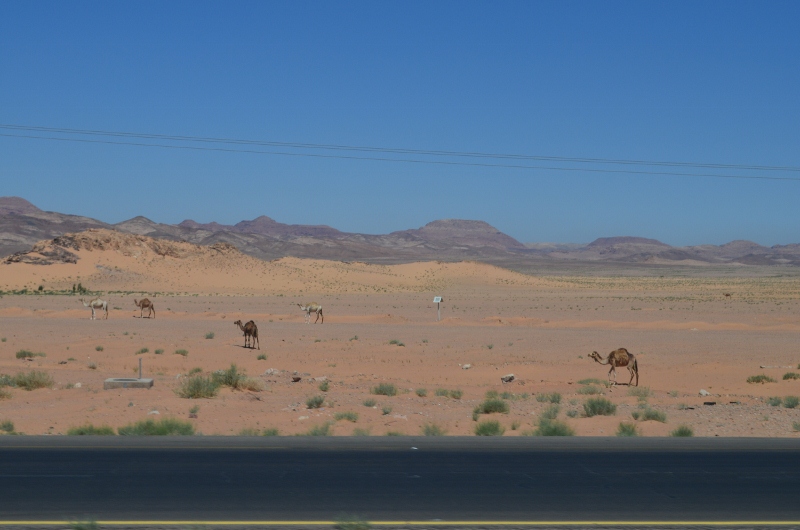
Our destination was the awe-inspiring city of Petra, centuries old and located about 2-1/2 hours away through the desert where Bedouins make their homes.  We were so lucky with the weather yesterday and today, where temperatures can soar to the mid to high 40oC.  Both days we have started off with 32oC rising to about 35oC which has been great considering that the Valley of the Kings and the visit to Petra were the two most strenuous days of the whole trip.

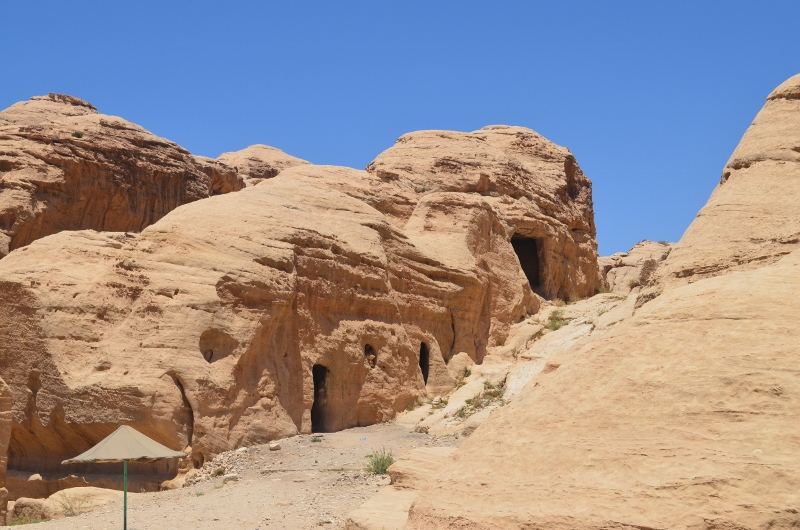
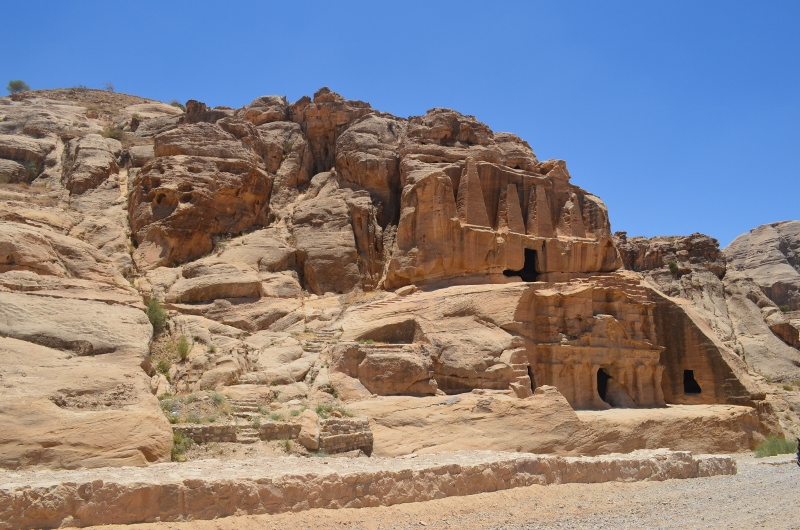
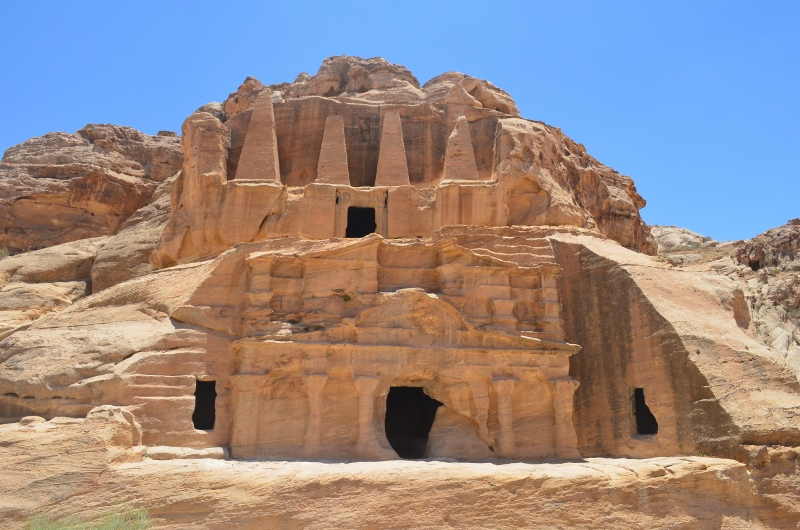
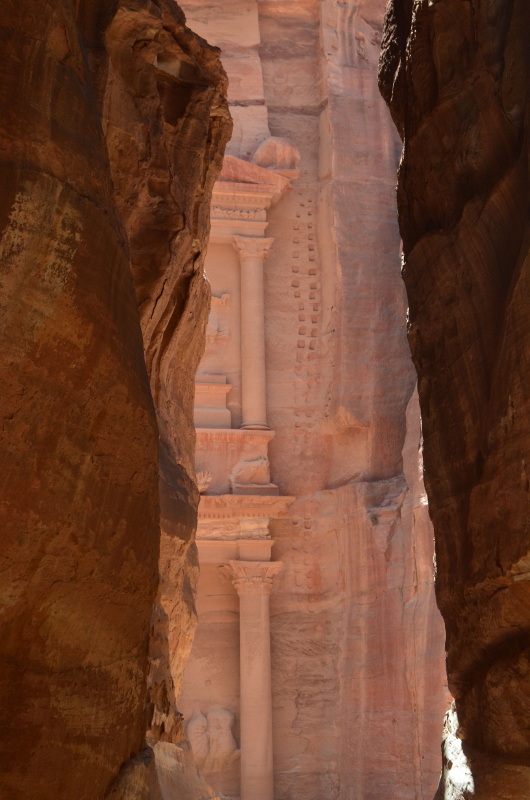
The Lost City of Petra was revealed as we made our way through the narrow rock gorge, dwarfed by towering walls.  At the entrance is the remains of an arch, one of its bases is still there.  There is much evidence of towers, obelisks and tombs with inscriptions built into the face of the sandstone and after walking for 2-3 kilometres, we finally emerged into a large square where The Treasury was revealed.  This is an elaborate ancient sandstone building, carved into the rock face and built from top to bottom.  It was featured in the film Indiana Jones and the Last Crusade.  It is believed to have been built as a tomb during the first century B.C.  

We walked on the remains of the original pavement and saw where channels had been carved into the rock to convey water to the inner city dating back to the second half of the first century B.C.  The city was built by the Nabataeans and flourished until the 3rd century when this civilisation was mysteriously destroyed and Petra was not rediscovered until 1812.

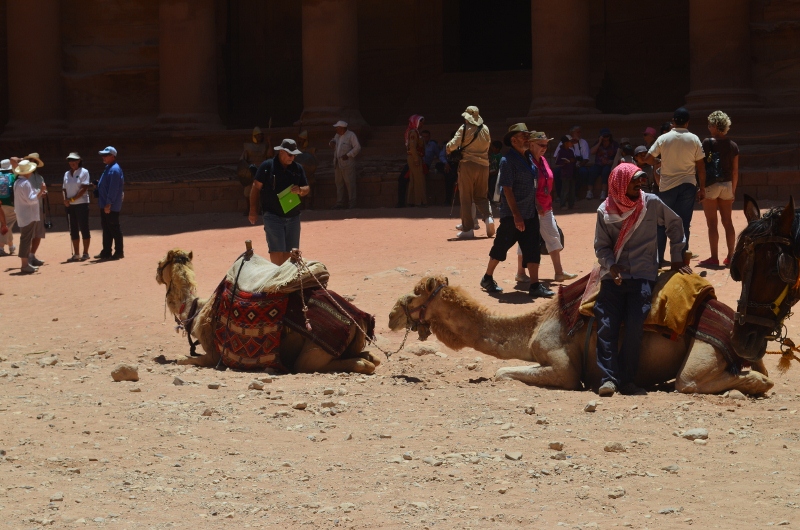
For those who found the long walk difficult, there were lots of seats spaced along the way and carts, donkeys, camels or horses to ride either one or both ways.  With some areas very narrow, we had to listen for the horses hooves in order to keep out of the way of the carts. 

It is summer break in Jordan right now, so there were a lot of children selling postcards.  English is taught in schools and we were amused to hear one very small boy spruiking his wares, calling out “Happy hour” and “Make my day!”’

Jordan is a beautiful country and combines desert with areas of green where the River Jordan flows.  The family unit is very important and we asked our tour guide about unfinished houses as we knew, unlike Egypt, that property taxes are paid before the building is started.  We were told that in Jordan, the second storey is built for the son so they have plenty of time to complete their houses.
sea princess petra 006 (800x530)

sea princess petra 017 (800x530)

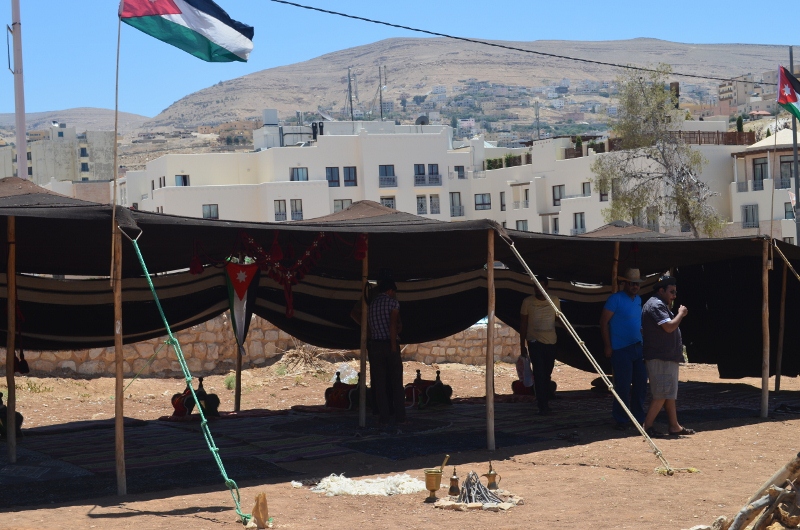
Bedouin tent
Bedouin tent
sea princess petra 047 (800x530)

sea princess petra 051 (800x530)

sea princess petra 052 (800x530)

sea princess petra 053 (800x530)

sea princess petra 071 (530x800)

sea princess petra 072 (530x800)

sea princess petra 074 (800x530)

sea princess petra 078 (800x530)

sea princess petra 093 (800x530)

Egyptian Treasures

sea princess safaga luxor 062 (800x533)

Sun, June 16

Leaving our ship at the small Red Sea port of Safaga, we boarded our coach for the 3-1/2 hour trip through the desert to the Valley of the Kings, crossing the Nile on the way.  We had to go in convoy with an armed security guard on each bus.  There was more security hidden in the hills that we could not see, so we felt quite safe.  There were also numerous police checkpoints to pass through, so if anything were to go amiss, they would be able to locate us. 

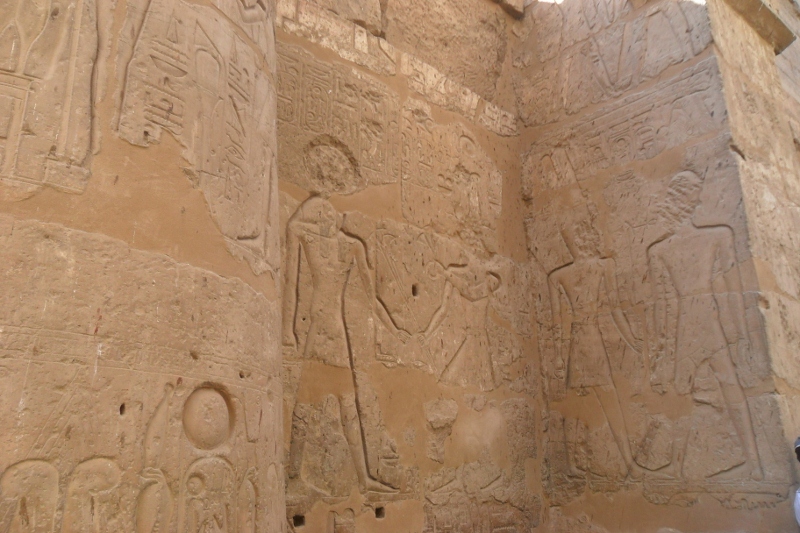
Our ticket covered visits to any three tombs (of the 62 that are open) and on the advice of our tour guide, we visited Rameses IV, Rameses IX and Rameses III.  The latter was the most impressive as it was in the best condition and we could hardly believe our eyes when we walked through this extensive tomb and were able to examine the hieroglyphics in their wonderful colours, much of it still in excellent condition towards the front.  Unfortunately salt and water are taking their toll and chunks of render have fallen off here and there and water seepage has removed the colour from the hieroglyphics on the back walls.

We opted not to pay extra to visit the tomb of Tutankhamen as we were told that it was very plain due the removal of the artefacts to the Egyptian museum in Cairo.  Most of the tombs are located in close proximity to one another, and fine gravel paths have been laid to make it easy to walk from one to another.

Unfortunately no cameras were allowed and we were advised to leave them in the bus otherwise they could have been confiscated and we may not have gotten them back at all.  However there were many vendors selling postcards and we were able to purchase photos of the tombs whilst on the bus.

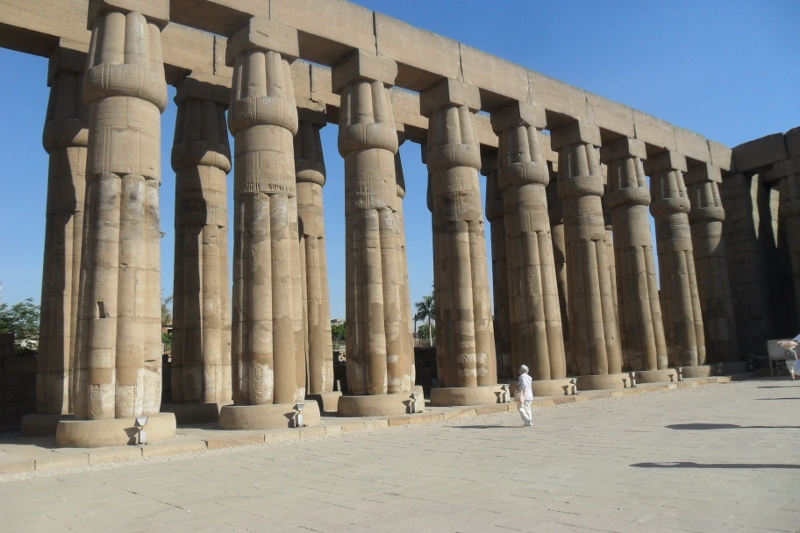
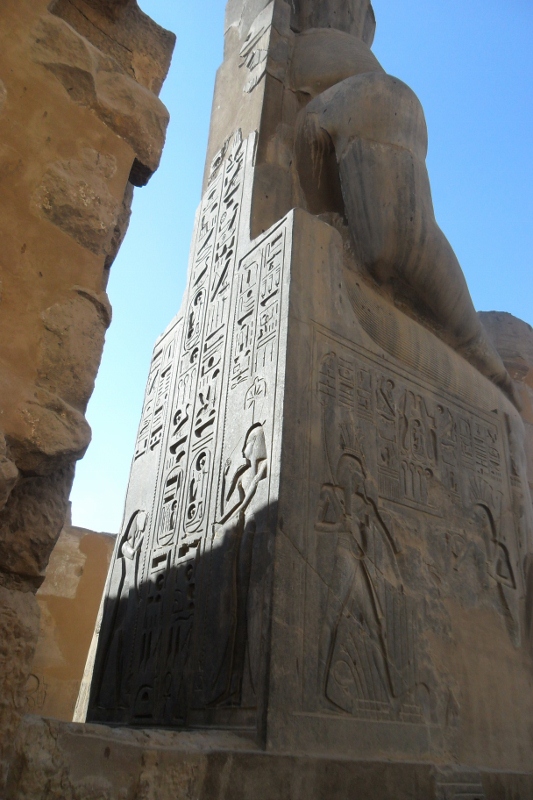
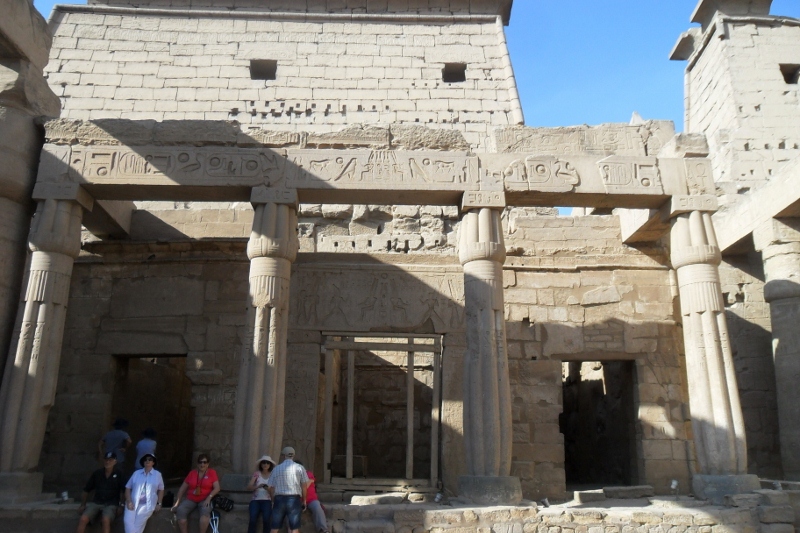
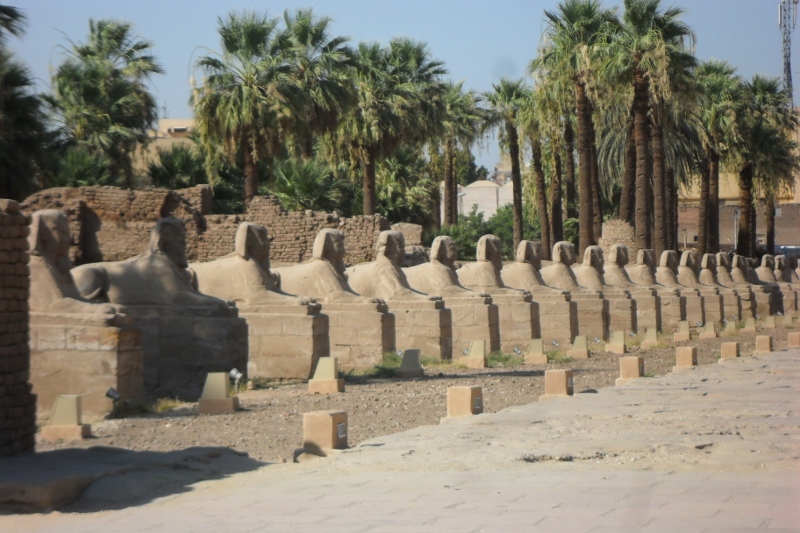
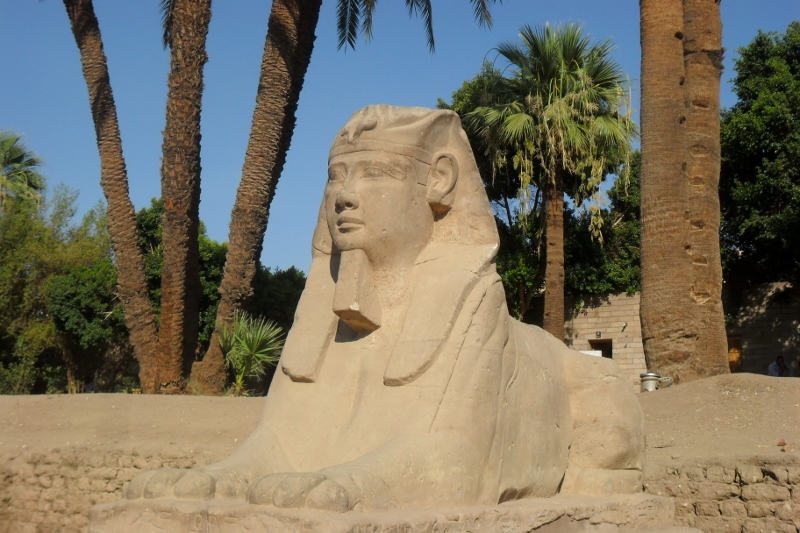
Next stop was the great Temple of Luxor built about 1400 B.C. and it was absolutely breathtaking to explore the site, taking in the enormous statues and columns.  We have seen it many times in books and on television, but nothing takes the place of actually being there taking in this ancient history first hand.  Of the two obelisks, only one remains; the other we saw in the Place de la Concorde in Paris last year.  Leading from the temple was the Avenue of the Sphinxes – some in surprisingly good condition – which extended quite a long way and was a very impressive sight.

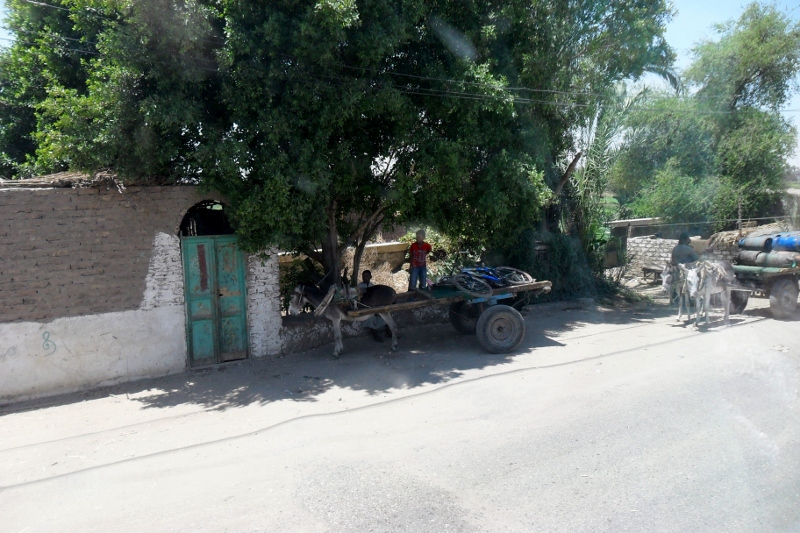
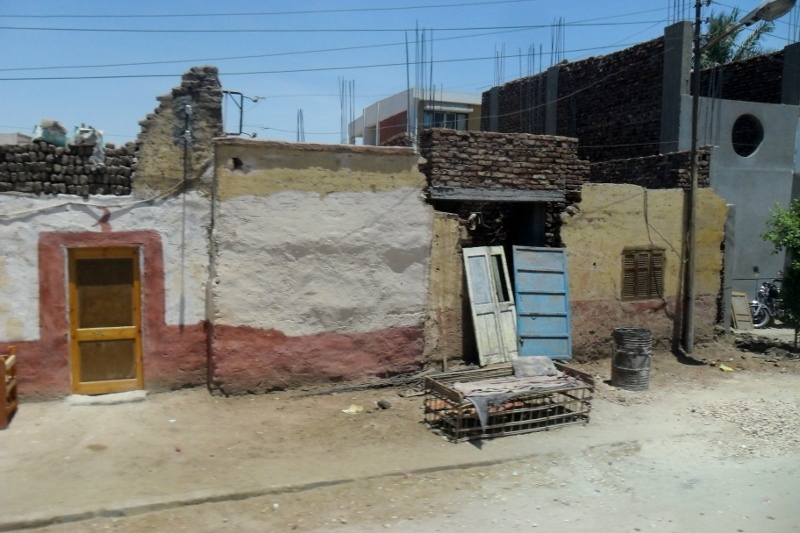
My impressions of Egypt – the contrast between the arid desolation of the desert and the lush green of the Nile Valley, where many people along the banks of the Nile are still farming the way they did in the time of the pharaohs; square apartment blocks and box like houses, in colours blending in to the desert, where the second floor on houses is never completed to avoid having to pay property taxes.  Lots of donkeys and mopeds.  Vendors wanting you to buy their souvenirs, even after you get back on the bus! 

On a final note, with the memory of the recent Australian ban on live export to Egypt in mind, it was reassuring to see donkeys in the fields grazing and all the horses with carts in the streets being fed as we made our way back to the ship in the afternoon.


EgyptRoad in EgyptTemple of Luxor (3)Temple of Luxor (4)Temple of Luxor (5)Temple of Luxor (6)Temple of LuxorTemple of Luxor (2)Unfinished housessea princess safaga luxor 080 (800x533)sea princess safaga luxor 118 (800x533)

Dubai

Mon,  June 10

What an enjoyable day in Dubai!  We thought our excursion only covered a trip to the museum, the gold souk and a look at a mosque.   What we got was so much more….

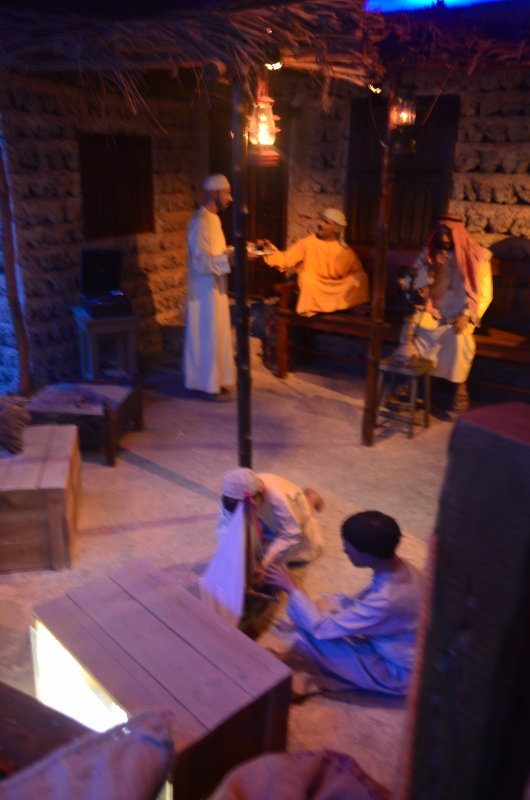
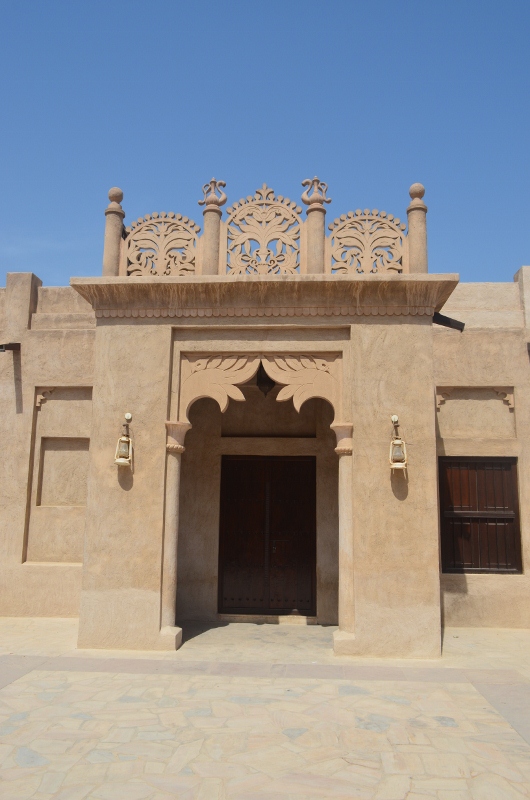
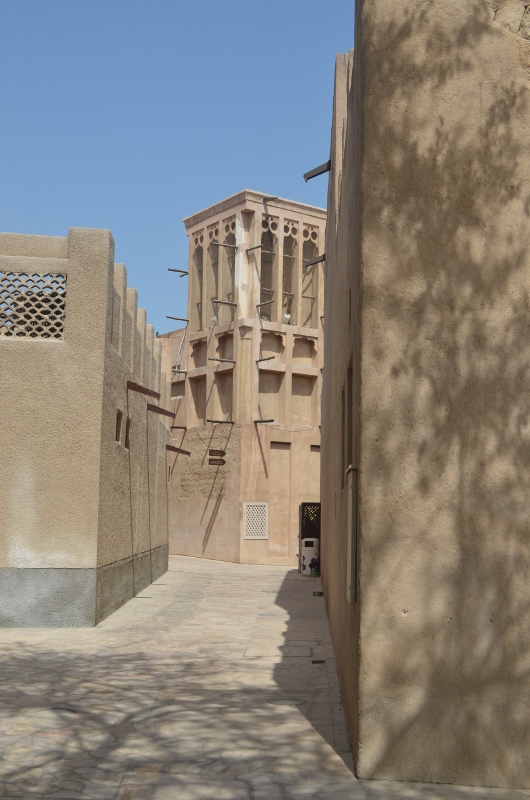
The morning started with a visit to the Dubai Museum in Al Fahidi Fort which was built in 1787 and opened as a museum in 1971.  Much of it is presented as realistic life-size dioramas as well as artefacts and hands-on displays.  Afterwards we headed to the ancient Al Bastaklya quarters, which is famous for its traditional wind towers. 

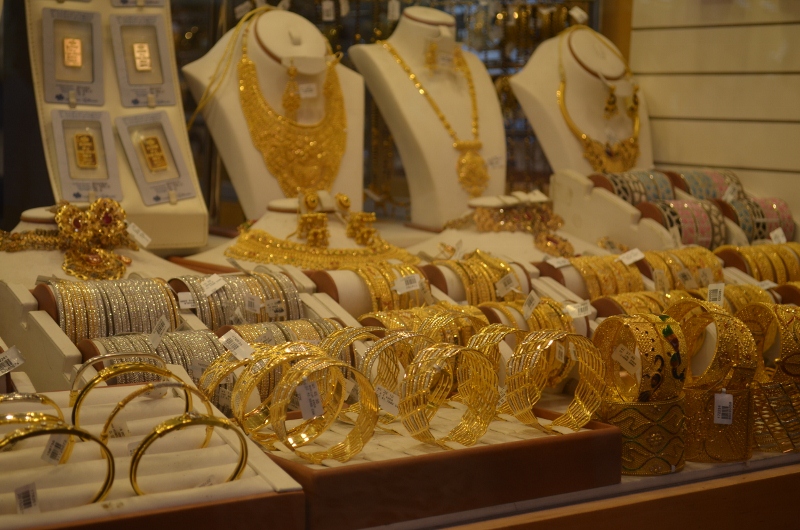
We then traded our coach for an abra (water taxi) crossing the river to Deira where we were able to visit a spice souk, which was amazing,  where Alex was able to buy some liquorice that he hasn’t seen since he left England and looked like a tree twig.  We also strolled around the renowned Gold Souk – a large concentration of jewellery stores where I was very happy to haggle for some jewellery.

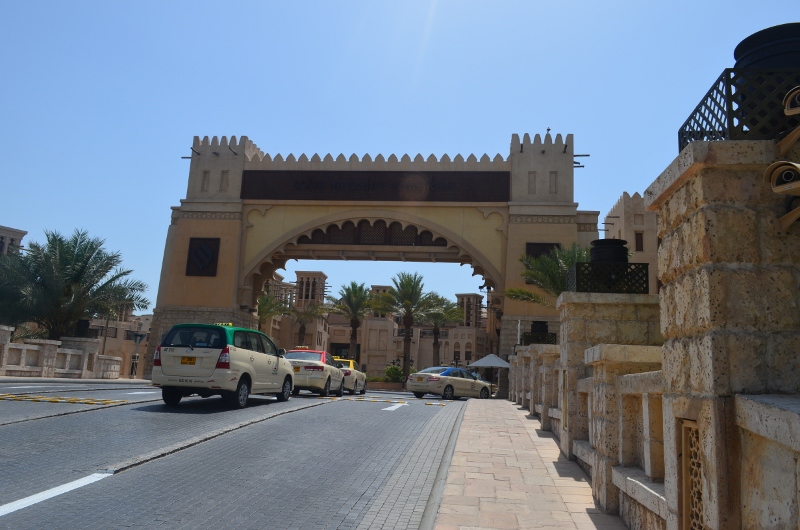
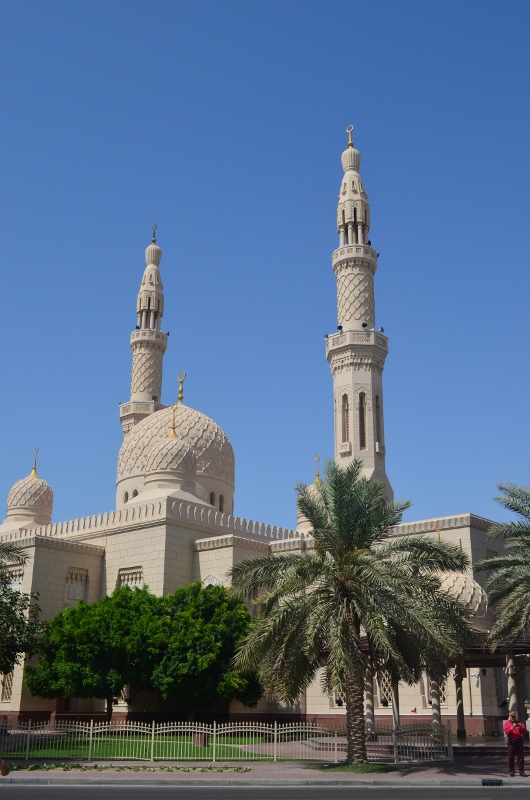
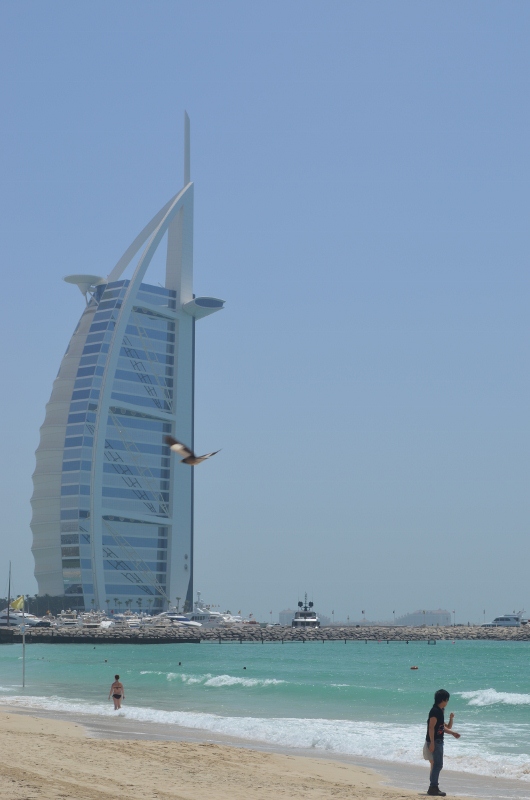
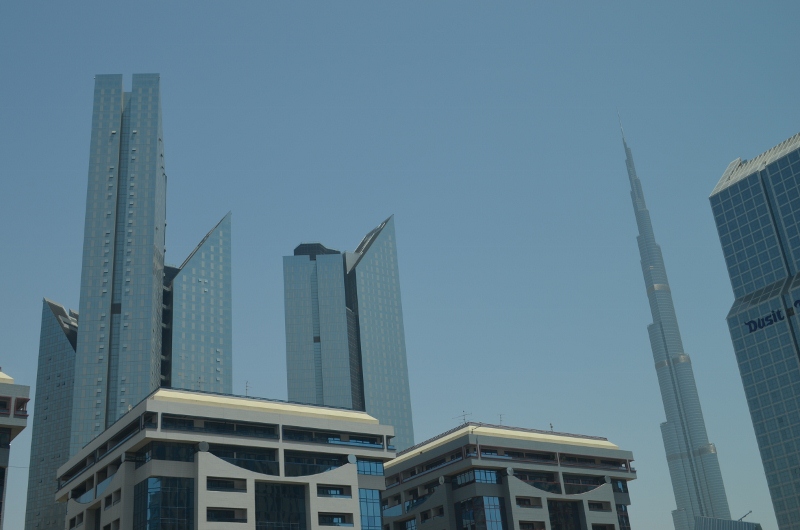
Finally boarding the coach again, we were taken to see the city sights, including the Burj Al Arab hotel in shape of a sail, the Burj Khjalifa, the tallest building in the world and the Jumeirah Mosque, one of the most photographed sites in Dubai and a wonderful example of Islamic architecture.

sea princess dubia 085 (800x530)sea princess dubia 100 (530x800)sea princess dubia 079 (530x800)sea princess dubia 073 (800x530)sea princess dubia 057 (800x530)

Water taxi

Water taxi

sea princess dubia 037 (530x800)Old Quarter
Water tower

Water tower