
About half-way between Alice Springs and Adelaide, in the middle of nowhere, sits a small town in South Australia called Coober Pedy, once the Opal Capital of the world, which seems to rely more on tourism these days than opal mining.
Opals were first discovered here in 1915 and until the 1980’s business was booming as more than one thousand miners supplied opals to overseas markets. But today there are fewer than 100 miners left, production has dropped right off and the people in the town hope that some young blood will come and help to kick Coober Pedy on again.
So why would tourists want to visit a mining town past its heyday? Probably because they want to see for themselves a town like no other – more than half of the 3,500 population live underground due to extremes in temperature – in summer, over 50oC is not unheard of and it can be freezing in winter.

Ventilation pipes mark the “dug outs”
The old miners realised that they couldn’t live in these temperatures, so they started to dig out their mines and live there. Later on they replaced them with underground homes, dug into the side of the hill. Each room has to be ventilated, and in the early days they consisted of wide, open air shafts but when drunken miners kept falling into them on their way home from the pub, they were replaced with thin pipes with mesh on top to keep out the snakes. This is what you see today.
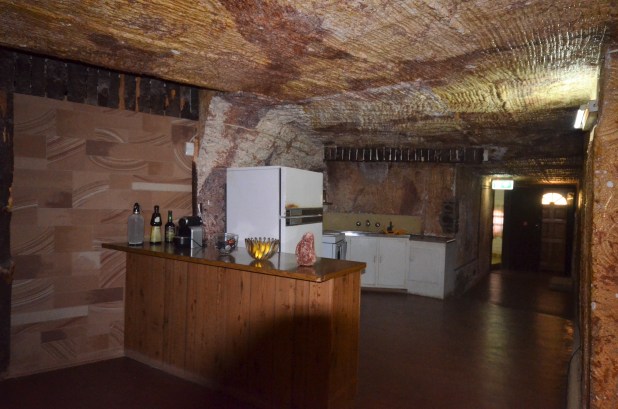
This is a display home underground.

Electricity is no problem but there is no mobile phone connection underground, so you need a reliable alarm clock!
All houses have a front door above ground. Some houses have all the rooms underground and others have built some rooms (such as the wet areas) above ground and the living rooms and bedrooms are dug out. While temperatures soar and plummet, below ground it is always about 23-25 degrees C and they say you will get the best night’s sleep you have ever had.
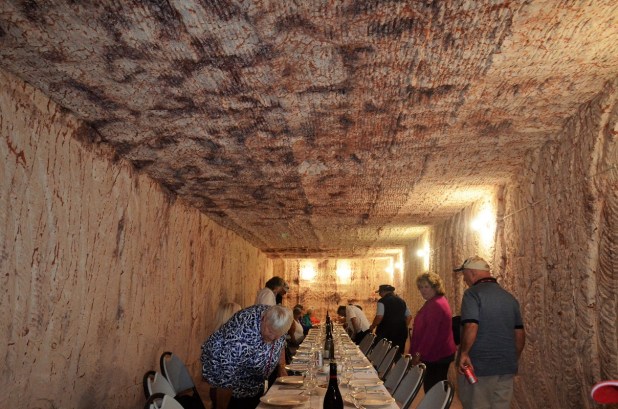
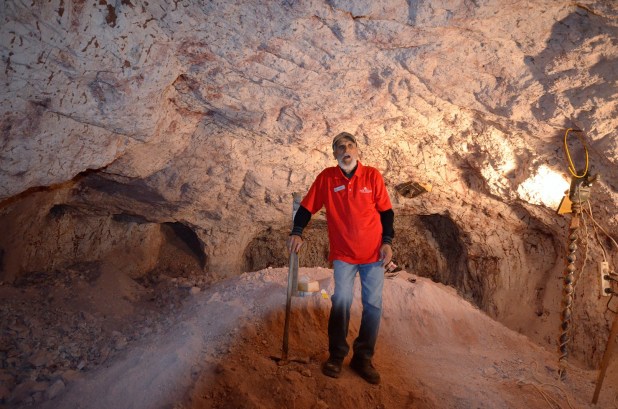

We ventured down a mine, had a nice Greek lunch there and spent the afternoon looking around the town and surrounding areas. It probably has the only golf course in the world with no grass, and the golfers are given a grass mat to tee off.

There are no gardens or flowers, just desert, and the areas surrounding the town consist of thousands of mounds where miners have tried their luck.
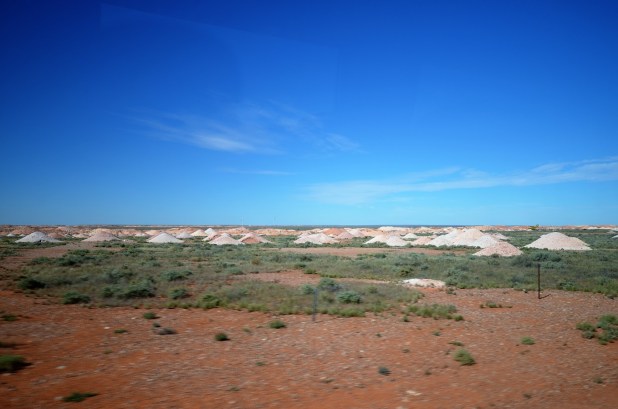

There are no company mines here, it is too difficult and they would not survive. All you need to find opals is luck!
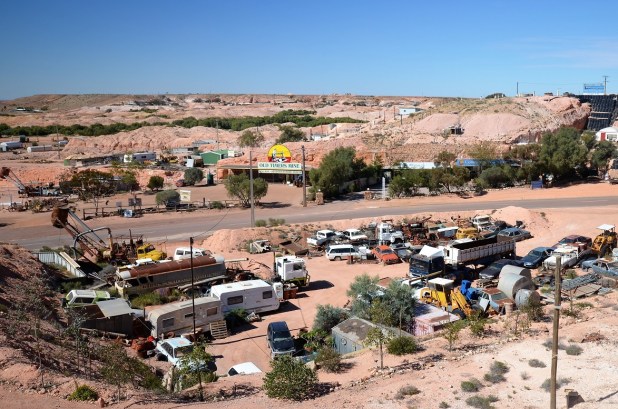
Here is a collection of rusting old cars and obsolete mining equipment. Every few months someone comes into town to take it all away.
One thing there is no shortage of is opal shops, which is just as well; the only opal chips I managed to find were in the charm I bought for my Pandora bracelet!
Dining out is not a problem; around 45 nationalities are represented, mostly from Europe and the Mediterranean. Very multicultural.
So if you would like to go somewhere really different, do yourself a favour and visit Coober Pedy and stay a few nights in the underground motel. It’s the only place where house reno’s are not a problem. Need another shelf? Dig a hole. Need a walk-in robe? Dig a bigger hole….and you might even find some opals while you’re at it.
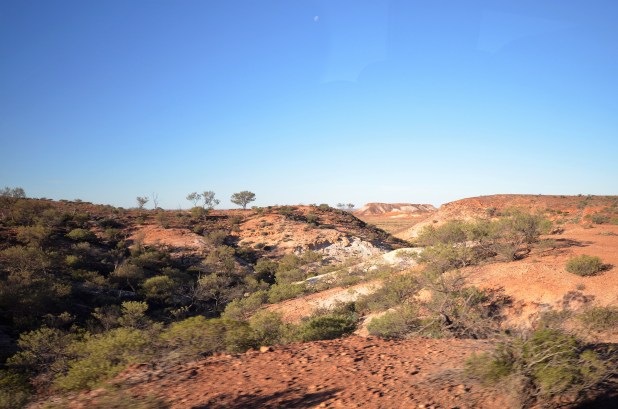
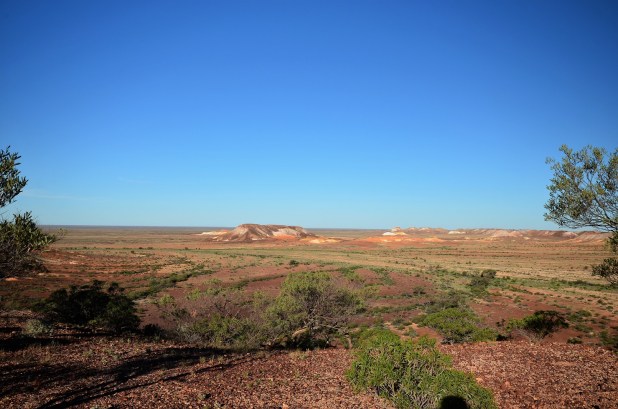

The Dog Fence. It seems to go on forever, like the red dirt and blue sky
The Dog or Dingo Fence was built in the 1880’s and is the world’s longest fence at 5,614 km or 3,488 miles. It has in the most part been successful in protecting sheep from dingo attacks. You may be surprised to know that some sheep and cattle stations can be larger than some small European countries, and tens of thousands of sheep were being killed every year before the fence was completed.

The end of a busy day at Coober Pedy – time to relax with canapes and drinks while watching another amazing sunset. Then all aboard for a sumptuous dinner in the restaurant.
Next morning, the outback reds and oranges gave way to lush green as we made our way into Adelaide and the end of a great rail journey.



 Quilts, Cats and Me