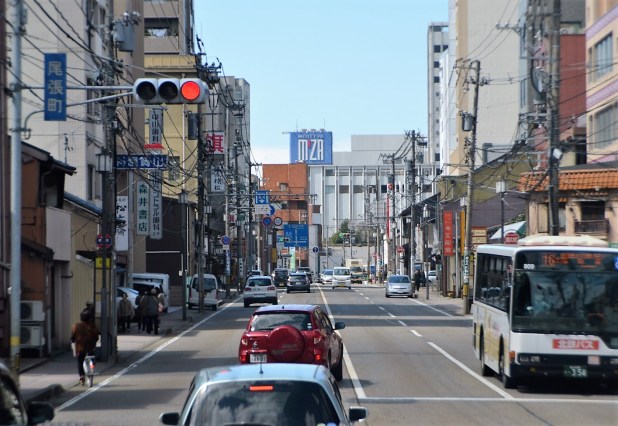
Kanazawa, Japan

 Kanazawa (15)

What a lovely town, set in between two rivers.  Saturday, 26 March and we were off again on another adventure!  This time to Kenrokuen Gardens, and the Samurai and Geisha districts.

Such a pretty drive with snow on the majestic Japan Alps.  We passed through small villages consisting of several houses close together surrounded by some land.  There were a lot of townhouses as well.


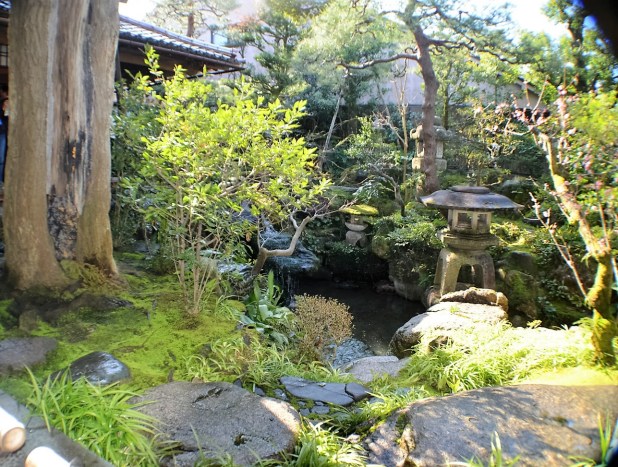
We started our excursion by walking through some winding streets with beautifully restored residences known as Nagamachi Samurai House Row.  After removing our shoes, we walked through The Terashima Samurai House, circa 1770, for a closer look at how a middle class warrior lived.  Every sliding thick-paper door had a picture of a landscape drawn on it.  The gardens were very skilfully laid out, with a waterfall, streams, a bridge and various kinds of garden lanterns arranged here and there.
Kanazawa (2)

The Higashichaya Machi district was the next stop, established in 1820, it is the home of the geisha.  Kanazawa is one of the few cities were traditional geisha still exist.  We did see the building where the girls train for 5 years from the age of 15 years, but it is very difficult to actually see them.  There seemed to be only one teahouse that offered performances to visitors – at a price!


We did see lots of girls in kimonos, however, and even a couple who were having their wedding photos taken.  They were very surprised to be suddenly surrounded by about 20 people with cameras, but they graciously posed for us.

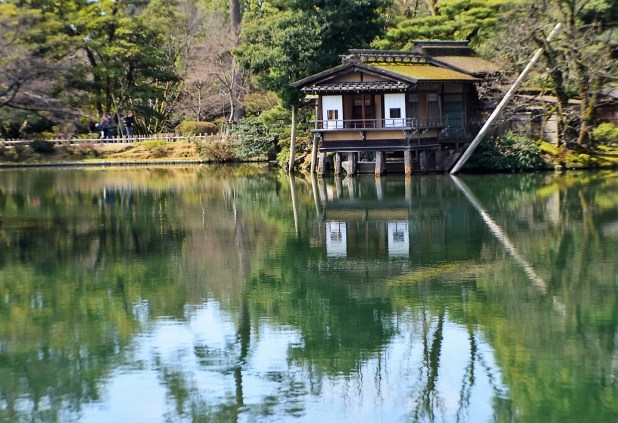
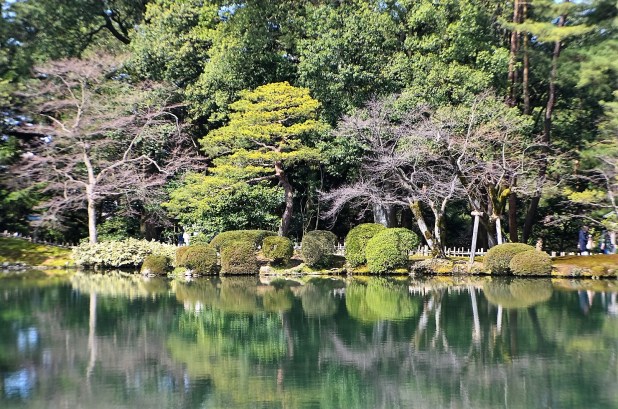
Our final stop was to the lovely Kenrokuen Gardens, of the celebrated “Great Gardens of Japan”.  This 25-acre landscaped garden was opened to the public over 135 years ago and we spent an enjoyable time wandering the paths to see Japan’s oldest fountain, a teahouse dating back to 1774, winding streams and a pagoda donated by a warlord as well as all the beautiful trees.

Kanazawa (10)Kanazawa (12)Kanazawa (11)Kanazawa (13)

Modern as well as traditional, we though Kanazawa has a lot to offer, and we enjoyed our day – especially the cherry blossom ice cream!


Maizuru, Japan

Konnichi wa!  We were all off to an early start with our passports and forms in hand, to meet with customs officials to be fingerprinted before heading off on our excursion to Kyoto this morning, Friday 25 March.

Maizuru Photo1


Just a short ride through town and we joined the highway, one lane each way, for the trip to Kyoto.  No more “concrete jungles”, just sparse housing and rice paddy fields.  As we made our way up the mountain, we passed through 15-20 tunnels of varying lengths – I lost count!

We took many photos today, not only of the places we visited but of the food as the packaging is a work of art in itself.  We had no idea what the products were, but they looked amazing.  Also the vending machines were interesting – I don’t think there is much that you cannot buy in a machine.

We explored the Ryoanji Temple with its famous Zen rock garden featuring 15 rocks set in meticulously raked white gravel and the beautiful Golden Pavilion considered a premier example of the Muromachi Era (1337-1573) design.  The pond is the centre of this garden and you could spend a lot of time here, just admiring the beauty of it all.  We thought we saw some cherry blossoms in bloom but they turned out to be flowering plums.  Still beautiful.

Next was an authentic Japanese lunch at the Harvest Club, a hotel and restaurant.  The food was beautifully presented, not only delicious to eat but also pleasing to the eye.  We had no idea what most of it was but we ate everything and we were full for the rest of the day.

Our final stop was for shopping in the town and to see the bamboo forest. Many interesting little shops to explore and a very enjoyable introduction to Japan.


Busan, South Korea

On Thursday, 23 March we arrived in Busan and we went our separate ways to do different tours.  Alex to the United Nations Memorial Cemetery, and I went to the Bokcheon Museum.  We both visited the Busan Museum and the Lotte Department Store.

It is the largest port city in South Korea and the world’s fifth largest seaport.  With a population about the same size as Sydney, Busan can trace its history back as far as the Palaeolithic Age.

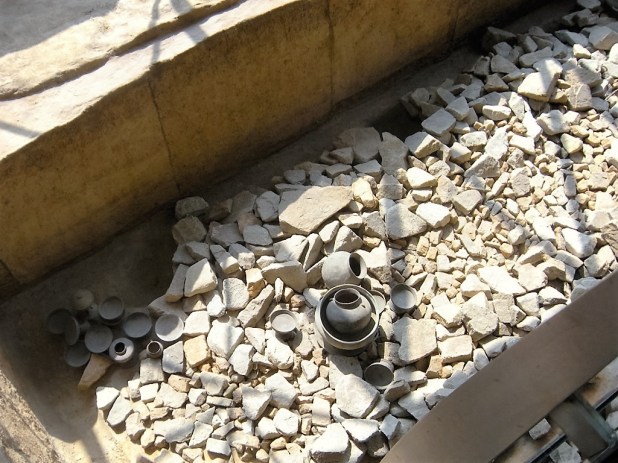
The city was about 35 minutes’ drive from the port and there were many blocks of apartments along the way.  My first stop was the Bokcheon Museum which was an interesting mix of archaeological relics, paintings and ceramics and outside we saw actual tombs that have been discovered dating back to the 6th century.

Bokcheon Museum (2)Bokcheon Museum

The Busan Museum was much larger with several exhibition halls and focused on the history and culture of Busan.  Everyone agreed we didn’t have enough time there, but it was a good introduction to this country’s history.

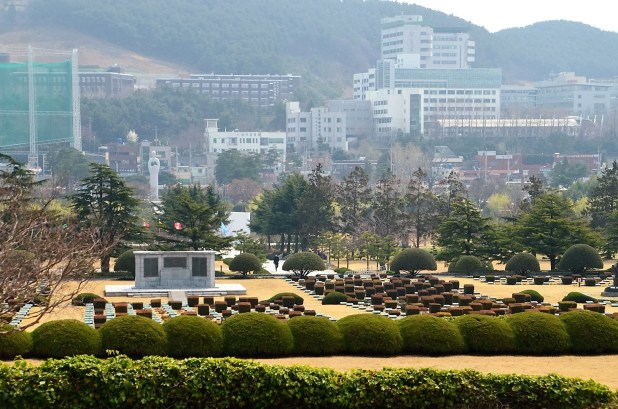
Alex’s tour centred around the visit to the U.N. Memorial Cemetery.  The 35-acre Park contains the bodies of 11,000 soldiers from the 16 countries who died during the Korean War and the soldiers dispatched from the 53rd Division of the Korea Army have been guarding the Main Gate and the East Gate since 1 August, 2007.

Busan cemetery (3)Busan cemetery (4)Busan Cemetery (2)

Finally, the Lotte Department Store.  On the 13th floor, there is a very large observation deck to view the harbour and the city which gave quite an impressive view of the large port.  I didn’t think so much of the Lotte Department Store – prices are high and nothing that we could not buy at home.

There is a lot more to Busan – a world class aquarium and beautiful beaches; unfortunately, no time to see them in the time we had available but the visit to the cemetery was the goal for today to take some photos for the RSL back home.

Busan (3)