Icy Strait Point

Friday, 10 August:

Yesterday, Thursday, was a relaxing sea day, as we cruised the waters of British Columbia and Queen Charlotte Sound, making our way into the open waters of the Gulf of Alaska.
DSC_1639DSC_1664

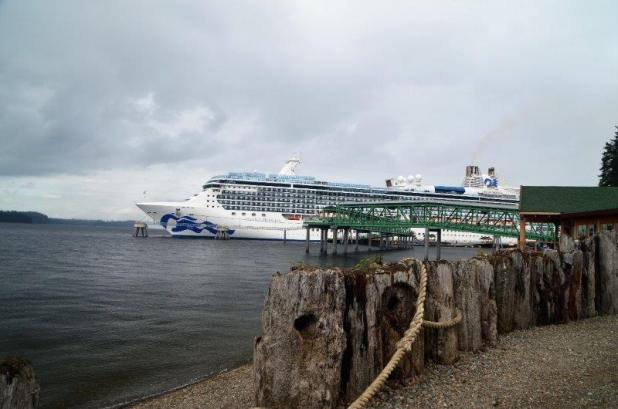
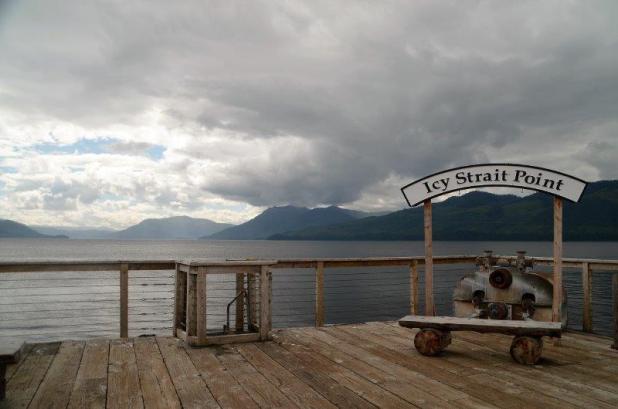
Today we arrived at Icy Strait Point located on Chichagof Island and headed out to search for brown bears and to do some whale watching.  We drove for about 30 minutes through the interior forests to the Spasski River, where we hoped to see some bears out feeding.  We walked the trails to three viewing platforms, but not a bear in sight.

We had better luck on the next part of our day out when we boarded a catamaran for Port Adolphus, which is one of Alaska’s premier whale-watching sites.

We found a pod of twelve whales “bubble net feeding” and we watched them do this for a long time.  It is a feeding method unique to humpback whales where one whale will dive beneath a school of fish and begin to exhale out of its blowhole to create bubbles.  More whales will start to blow bubbles while circling their prey.  They corral the fish into a tight circle by creating a net of bubbles which will surround the fish and stop them from escaping.  One whale will sound the call and then all the whales will swim to the surface with their mouths open to feed on the trapped fish.


This slideshow requires JavaScript.

Seagulls take advantage of the abundance of fish coming up to the surface and we saw a large flock of gulls waiting for the bubbles to appear.  They would float on the water and suddenly take to the sky and circle over the area where the whales would appear.  Food for all!

We had a naturalist on board who was a fund of information about the whales behaviour, and she said it was the first time she had seen so many whales bubble net feeding at one time.  The whales completely ignored our boat, even swimming across the bow a couple of times as they searched for fish.

Before we left, the crew lowered  a hydrophone (an underwater microphone) into the water and we could clearly hear the whales communicating with each other.  How lucky we were to be able to see and hear these amazing and majestic creatures.  It was an experience we will never forget.
DSC_2303

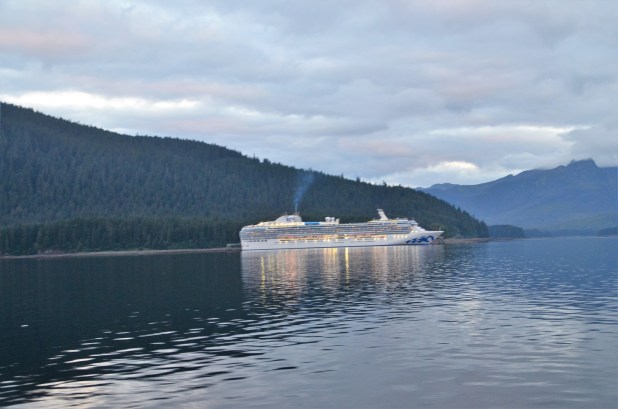
Heading back to the ship at the end of the day


North to Alaska

Wednesday, 8 August:

DSC_1610

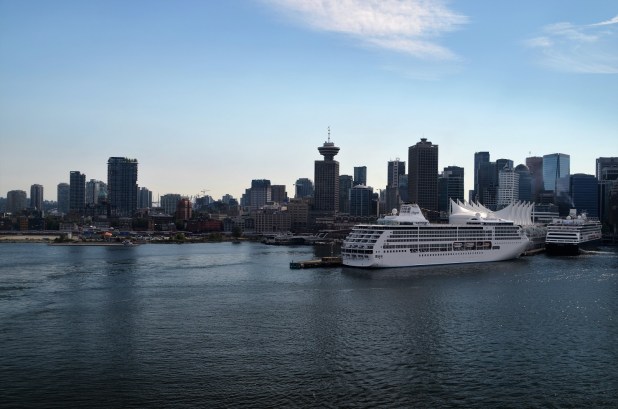
Departing from Vancouver

After arriving back in Vancouver we were dropped off at the Terminal where we said goodbye to a few of our group.  Some were boarding a Holland America ship for a 7 day cruise, disembarking back in Vancouver and flying home.

The rest of us were boarding the Island Princess for a 7 day Voyage of the Glaciers cruise disembarking in Whittier, where we would fly back to Vancouver and then home.

The Island Princess is the smallest ship we have been on, with a maximum capacity of 2390 passengers and 810 crew.  Very nice ship and we were looking forward to getting on board.

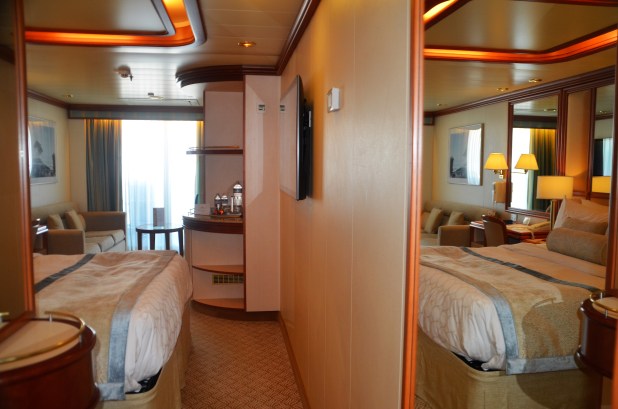
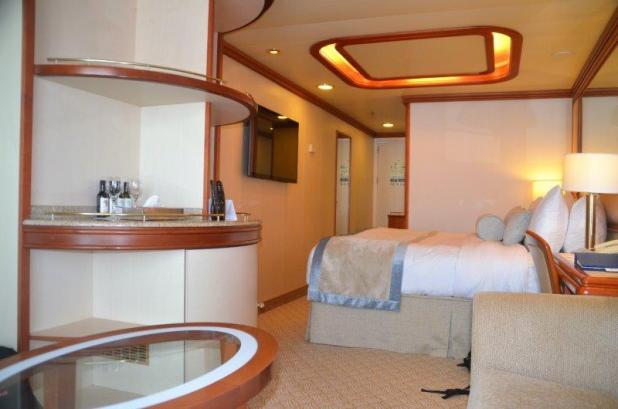
Lucky for us, most of the passengers were new to cruising, so our Elite level enabled us to have priority boarding which made the process of getting on board very quick indeed.  We had all been booked into rooms with balconies, which we were looking forward to, however a surprise awaited us – Princess had upgraded us to a mini suite!  It was lovely having the extra space – and the bathroom even had a bath!

DSC_1606DSC_1608

Then we discovered that having the mini suite included “Club Class Dining” which entitled us to the use of a separate dining room –  or in this case, a separate entrance to the dining room for all meals and our own waiters for the entire cruise with no fixed dining times.

Normally, there wouldn’t be any delays for dining but being a smaller ship with fewer choices people were lining up, especially for dinner.  However, no queues for us – fantastic!


Lessons from Geese

DSC_1240

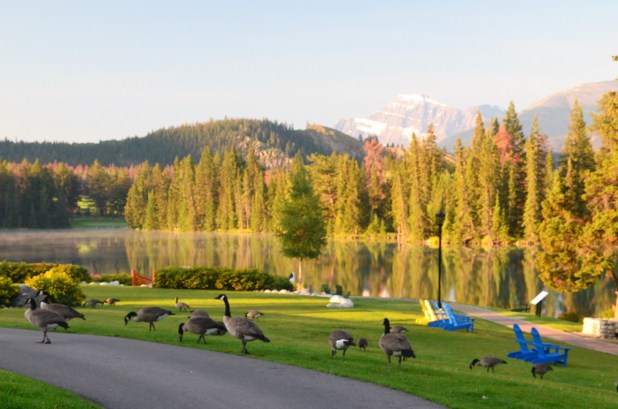
Canadian geese at Jasper Park Lodge

Here is a nice little story that our Canadian tour guide passed around to us during our tour.  She didn’t know where it came from, but after doing a bit of research since I came home, I discovered that the author’s name is Milton Olson.

It’s a charming life lesson which I enjoyed reading and I hope you do too…..

Next fall when you see geese heading south for the winter, flying along in “V” formation, think about what science has learned about why they fly that way.  As each bird flaps its wings, it creates uplift for the bird immediately following it.  By flying in a “V” formation, the whole flock can fly at least 72 percent further than if each bird flew on its own. 

Whenever a goose falls out of formation, it feels the resistance of trying to do it alone, and quickly gets back into formation to take advantage of flying with the flock.  When the lead goose gets tired, he rotates back in the wing and another goose flies on the point.  The geese honk from behind to encourage those up front to keep up their speed.

Finally, when a goose weakens or is wounded and falls out of formation, two geese fall out and follow him down to help protect him.  They stay with him until he is either able to fly or until he is dead, and then they set out on their own or with another formation until they catch up with the group.

If we had the sense of a goose, we would stand by each other like that!!

DSC_1233

When I was walking around the lake, I came to the edge of the golf course and there was a flock of geese on the green.  The golfers were trying to gently herd them into the water, but every time they picked up their clubs, the very determined geese were already back standing on the grass.  After several unsuccessful attempts the amused golfers gave up and just had to move on!

DSC_1199