Aomori, Japan

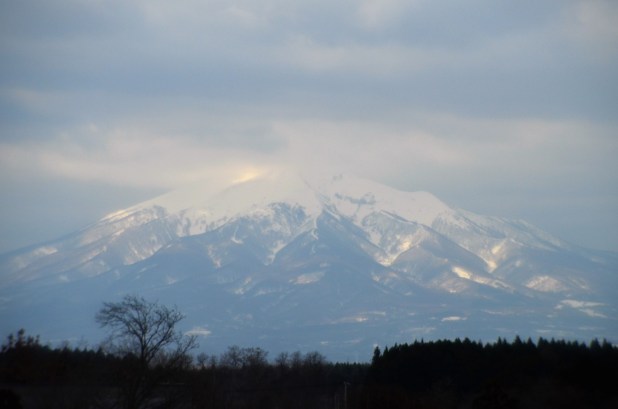
Aomori Mt Fuji

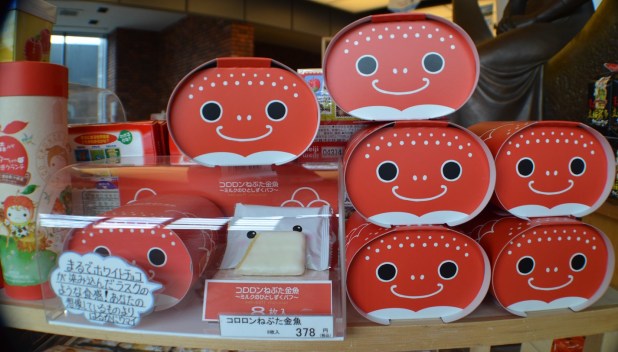
Monday, 28 March – The capital of the Amori Prefecture in northern Japan, Aomori is famous for its apple orchards (home of the Fuji apple) and the Nebuta Festival, an elaborate yearly event in which participants illuminate giant paper representations of samurai warriors, animals and popular cartoon characters and parade them through the streets.

Snow was still on the ground in places as we made our way to the Tsugaru Kanayama Kiln.  It is the end of winter but we have had great weather in Japan; today the temperature was about 8-11degC.  We were warm enough in just t-shirts and jackets, but of course, the coach and all the shops are heated.  It was a nice trip, through forests of beech, cedar and red pine.

Incidentally, we found out why so many people wear masks in Japan.  I thought it was to avoid germs or pollution – but no – it is because many people apparently suffer from hay fever caused by pollen from the red cedar trees.


Arriving at the kiln, we discovered that Aomori is also well known for unglazed copper-coloured pottery and we had an interesting tour and spoke to some apprentices as well as the owner.  Although this pottery was founded in 1985 it draws its inspiration from unglazed pottery made around 250 to 538AD.  I liked that they source the clay from the local reservoir and fire the kiln with local Japanese red pine wood.  We bought a small vase as a memento and enjoyed some of the local apple juice.
Aomori (2)

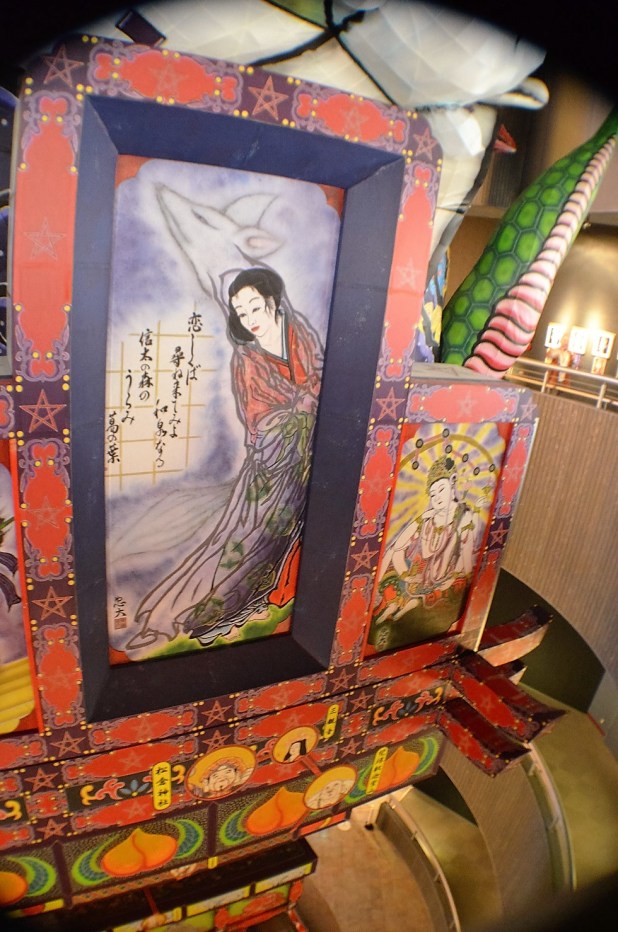
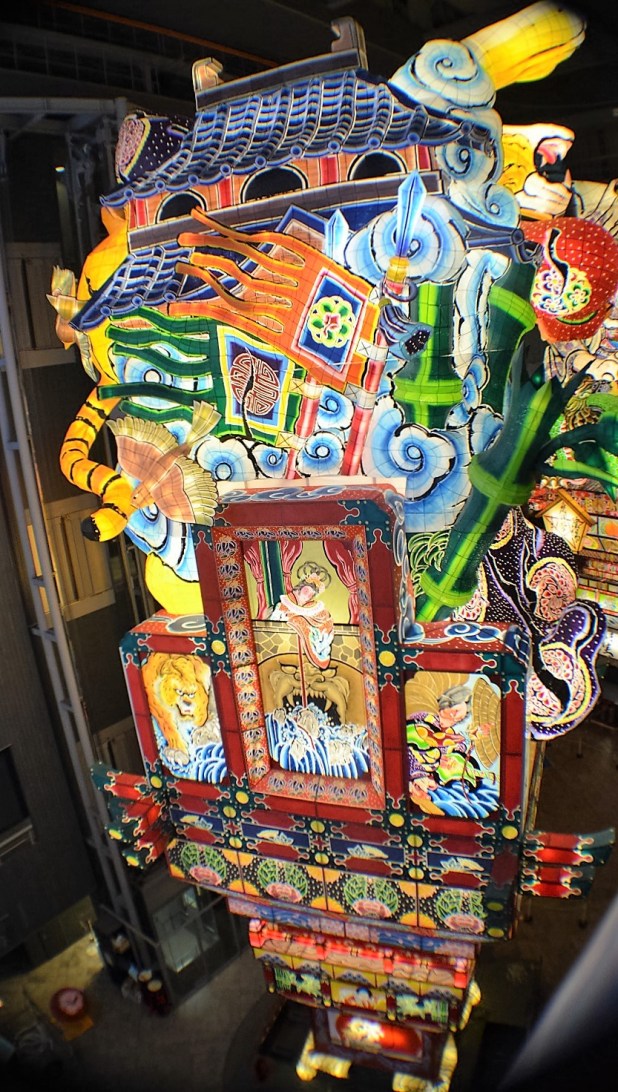
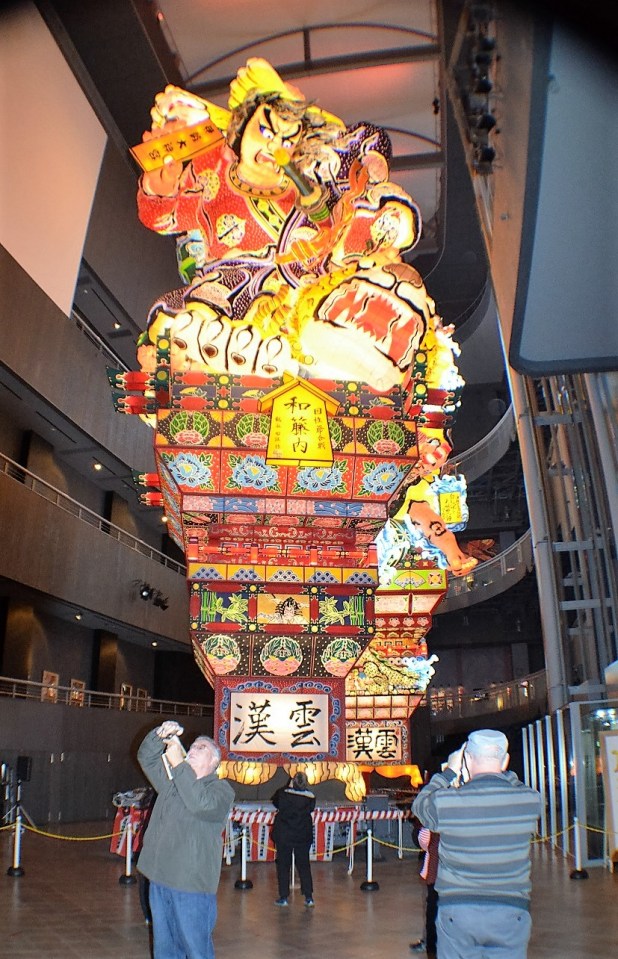
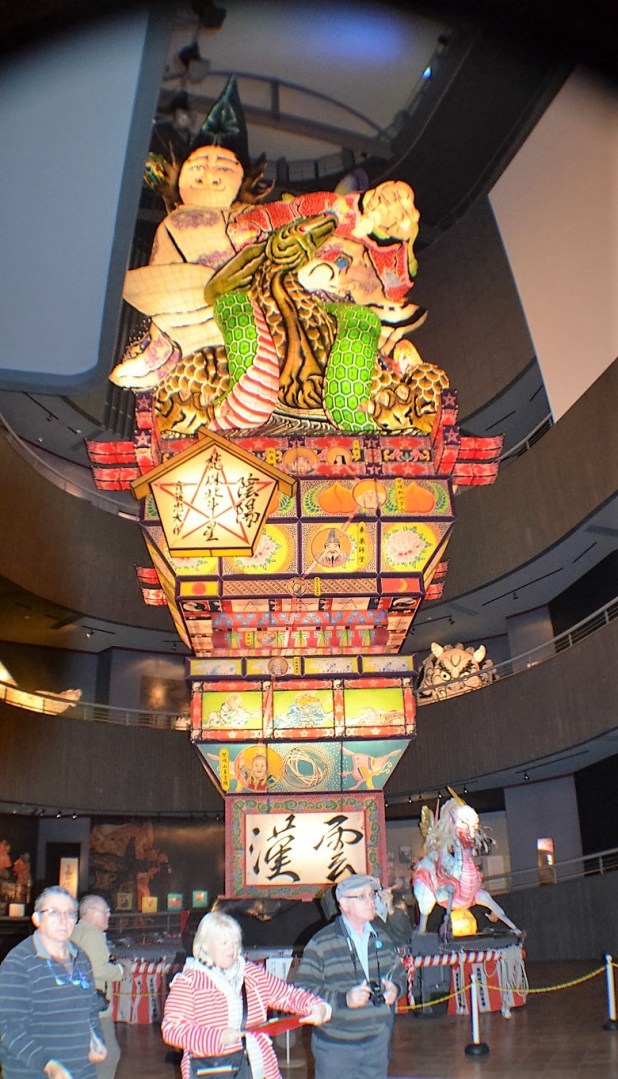
Our next stop was to Tachineputa no Yakata –  “The Hall of the Standing Neputa” we took the elevator to view the 3 floats on display.  They stand as tall as a 6-storey building and weigh 19 tonnes.  We also visited the workshop and our tour guide interpreted for the owner to explain how the floats are made.

Float construction


From what I remember, they start with just a drawing – not plans – and fix a metal pole into a base.  32 modules are formed using timber framing and wires which are tied together and then screwed in around the pole.   Paper is pasted over the wires and waterproof paints are applied.  All this work is done by volunteers. They are absolutely amazing to see and the painting is a work of art from all angles.  They are lit internally powered by generators and when the huge doors open for the parade, 6 men pull them along with ropes.  They are quite a sight to see.
FloatsFloats (5)Floats (4)Floats (3)Floats (2)

Shanghai


This morning, Monday 21 March, we woke up early at 5.30am to have a quick breakfast before our tour was due to leave at 7.30am.  We were just about to put on our jackets, when an announcement came over with the news that there had been a mechanical issue at 1.30am.  The part had been repaired but it meant that we would now be seriously delayed getting into port.

Disappointing, as we had booked a full day tour, the highlights being a visit to a temple with a Buddha carved out of solid white jade and the Shanghai Museum.

Confusion followed, as you can imagine, with thousands of passengers wondering if we would get off the ship at all.  But the captain updated us as much as possible and the staff worked hard behinds the scenes, trying to reorganise tours and hand delivering flyers of changed times to our staterooms.  Of the 9 tours, only two were cancelled; ours was not, but there would be no time to visit the museum or the temple.

Fortunately, we decided to go anyway, as the only alternative was to get the free shuttle bus into town.  A large number of passengers did cancel and the queue for the shuttle was very, very long!

Once underway, about 3.15pm, it took us about an hour to get into the city.  The day was fine but the sun was having a losing battle trying to shine through all the pollution!  Excellent roads, sweeping overpasses on top of overpasses and 7 lane highways.  The number of apartment buildings was just amazing – I have never seen anything like it.  Thousands of them on both sides of the highway, as far as the eye could see.  Land is so expensive that most people want to live in an apartment; but now so many have been built, they are called “ghost buildings” because so many are empty.

Our first stop was to the Yu Gardens, which the people kept open late just for the Princess tours.  Dated from 1559, this garden covering 5 acres is lavish and so beautiful, with its pagodas, pavilions and winding paths and caves, leading to a lovely pond full of carp.

To reach the garden, we walked through a very historic part of Shanghai called The Bund, along the banks of the Huangpu River.  This was formerly the financial district and is now full of shops and eateries.  We were sorry that we did not have time to stop, as we could have spent hours exploring this fascinating area.

Because we left so late, what was supposed to be a lunch stop now became dinner.  This was enjoyed on the 4th floor of a floating restaurant with magnificent views of the city.  The food was excellent and the dishes just kept coming.

Next we went to the stunning Jin Mao Tower – a lift took us to the observation deck on the 88th floor in 45 seconds where we had the most breathtaking views of Shanghai by night.  The middle of the building is hollow and you can lean over and see right down to the ground.

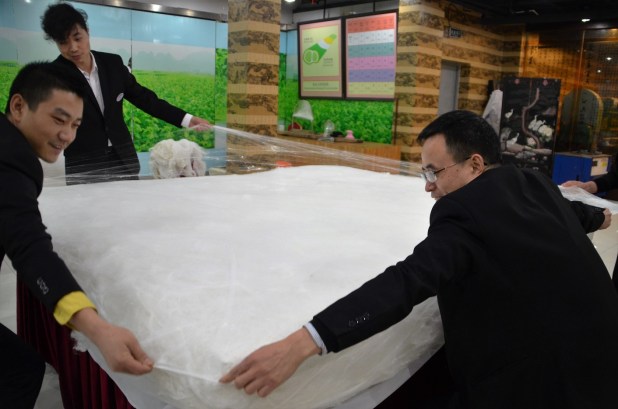
The last stop was to the Local Silk Museum where we were given an interesting talk and demonstration.

Shanghai Local Silk Museum

Luckily the ship was not sailing until 11.00pm and we got back on board about 10.15pm.  It was an amazing day and Shanghai is, without doubt, the most vibrant and beautiful city I have ever seen.  The architecture is amazing, and nearly every building is lit up at night.  We had a wonderful tour guide and we both agreed that we would love to spend more time in this fascinating city.

Koh Samui, Thailand

 Ko Samui

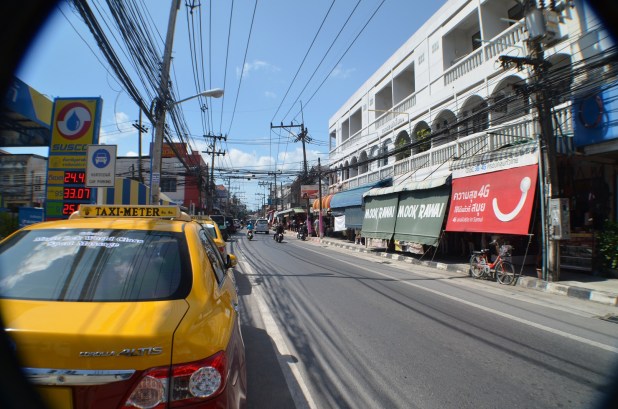
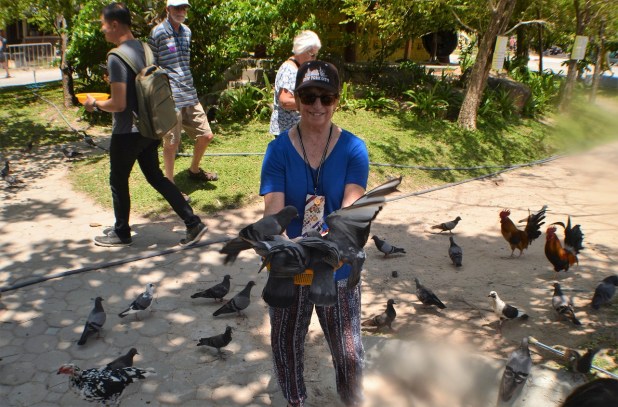
Saturday, March 12 – This island was a tender port and once again, the weather was hot and humid.  We decided to explore it on our own and after arriving in the town, we did the walk through all the cab drivers waving maps in our faces, which is of course to be expected.

Seasoned travellers that we are, I have found the best way to get through is not to make eye contact and just keep walking!

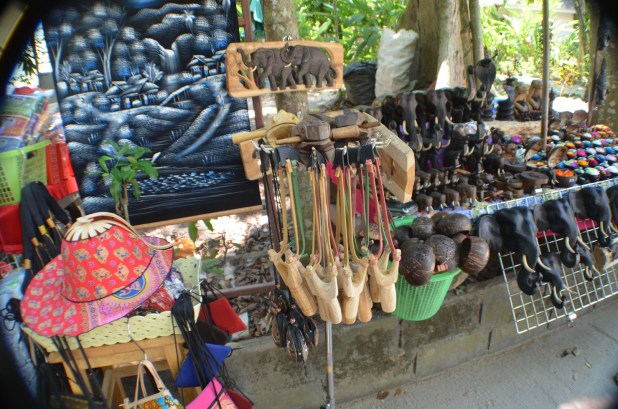
So we grabbed a map and walked through town so we could buy some souvenirs and get our bearings and do a bit of bargaining before deciding where to venture to.  Once out of the melee, we found a lone cab driver and began bargaining for what we wanted to see.  It worked well.  Pen and paper is good to write down the price you agree on, making sure it covers two people and very importantly, is a 2-way fare!  The driver’s wife was there too, as her English was not too bad and she and their little daughter came along for the ride.

I thought the town a bit shabby but then we drove through beautiful scenery – this island is 90 percent virgin rainforest, surrounded by great granite mountains and lovely stretches of white sandy beaches.  Very popular with backpackers, Kho Samui (or Samui to the locals) also has many resorts, restaurants and shops.

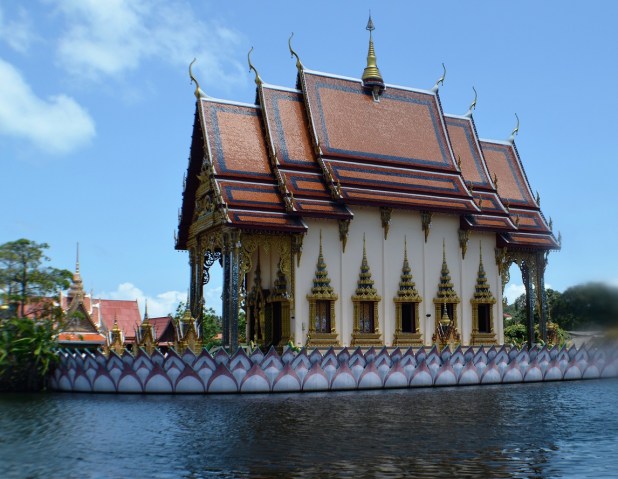
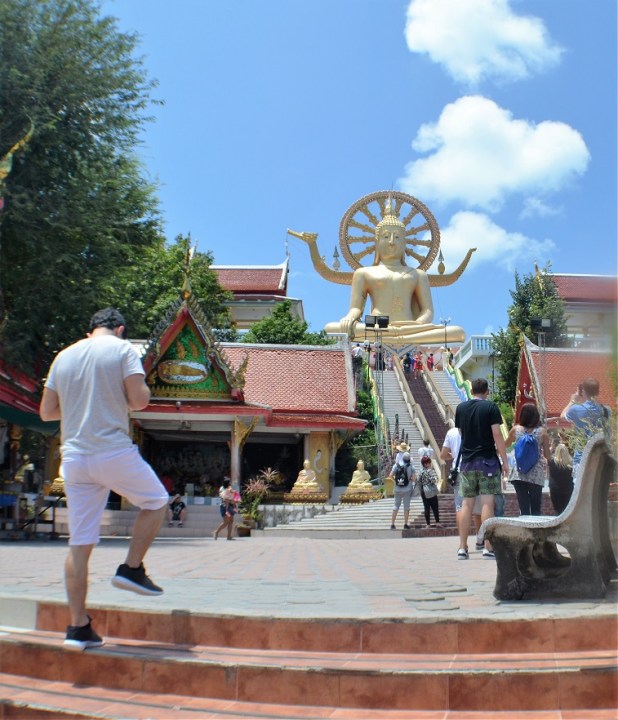
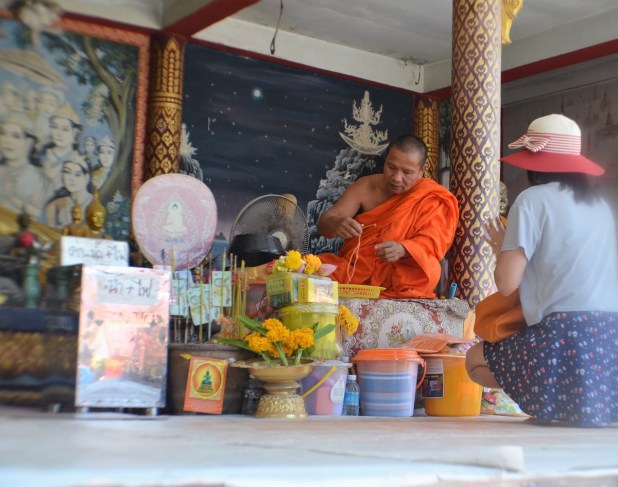
Our aim was to visit the Na Muang waterfall, very pretty with water cascading down a natural rock staircase, Big Buddha (Wat Phrayai), a massive 39-foot sitting Buddha and Wat Plain Laem which is home to a superb statue of Kwan Yin, the 18-armed Buddhist avatar of Mercy.  Along the way, we stopped at a market and our very friendly cab driver bought us a cold drink each (it was pink, no idea what it was) and a bag of a crunchy fried treats – some were banana and others were sweet potato.  Delicious!

Considering that we had never heard of this island before, we had a memorable day and great value for money!  The islanders also enjoyed it, as our sister ship, the “Sun Princess” came in at the same time, so the island was inundated with tourists.

Ko Samui (3)Ko Samui (2)Ko Samui (5)Ko Samui (7)Ko Samui (6)Ko Samui (4)Ko Samui (8)